Saint-Gobain Cultilene Automates the Production of Rock Wool Plugs Using Custom-Built Machines

Van Wees Waalwijk

Less waste, less manual labor, more control over production

At Saint-Gobain Cultilene, everything revolves around smart solutions for greenhouse horticulture. Among other things, the company produces rock wool plugs in which seeds germinate into young plants for growers worldwide. But behind that seemingly simple product lies a complex manufacturing challenge. How can rock wool be processed more efficiently, with less waste and less reliance on manual labor?

To address that issue, Cultilene turned to Van Wees Waalwijk.
Cultilene's Question

The existing production line required a lot of manual labor and resulted in significant material waste. Four separate machines each performed a part of the work, but together they did not form an optimal process.

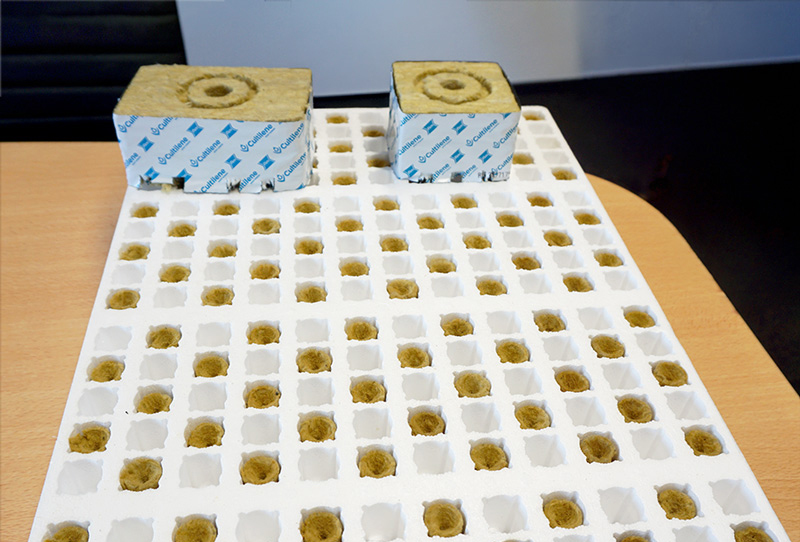
Cultilene Rock Wool Plugs

This presented two major challenges:

  • excessive material loss during production
  • excessive reliance on front-line staff

And it was precisely that last point that was becoming increasingly urgent.

“Workers are in short supply,” says Léon Kennis, Technology Manager at Cultilene. “We had to find smarter ways to produce in order to remain future-proof.”

The request made to Van Wees Waalwijk therefore went beyond just machine building. It wasn’t:“Build a machine,” but rather:

How can we automate the entire process more efficiently?

First zoom out, then engineer

At Van Wees Waalwijk, a project never starts with construction. First, we take a step back. Which part of the process truly requires automation? Where is the waste? Which step yields the greatest benefit? That approach makes all the difference.

Many customers come in with a specific question, but behind that question often lies a larger process issue. That is exactly what Van Wees Waalwijk tries to uncover.

“We almost never build machines that already exist,” says sales manager Willem van Gestel. “Every request calls for a custom solution. That’s why we want to first understand exactly what the problem is before we look for solutions.”

The preliminary study examines specifications, tolerances, and technical constraints. At Cultilene, this involved, among other things, testing how rock wool plugs could be accurately formed from rock wool without unnecessary material loss.

From Idea to Technical Solution

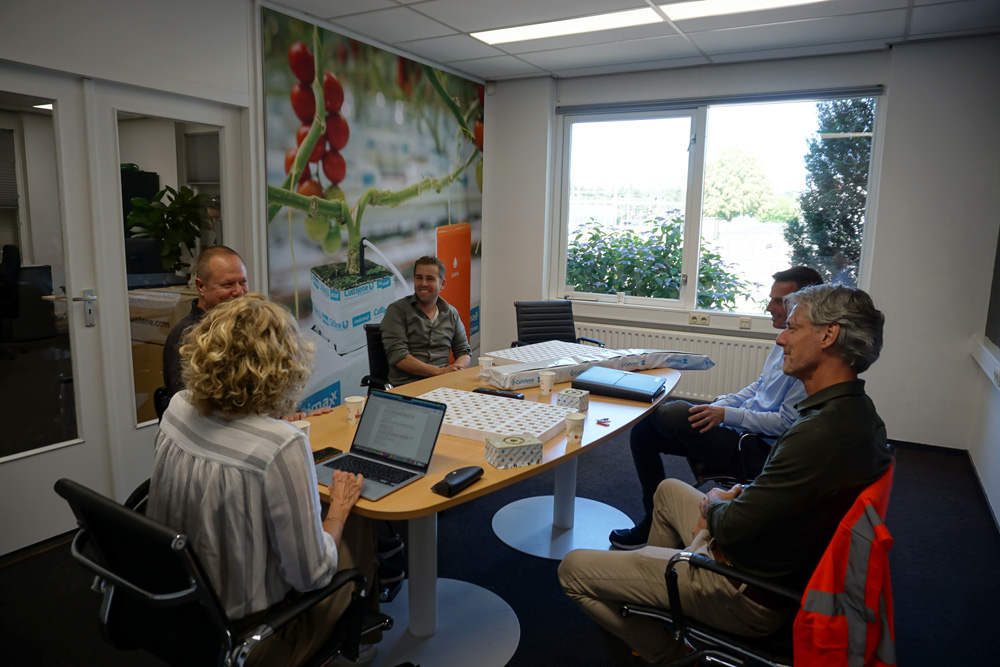
The first phase is all about thinking broadly. Engineers, sales engineers, and the customer sit down together. Ideas are discussed, rejected, reevaluated, and continually refined. Sometimes, this process yields multiple potential solutions. By narrowing down these possibilities step by step, we ultimately arrive at a solution that is both technically and economically feasible.

Cultilene

Van Wees Waalwijk also uses 3D visualizations and test setups to bring ideas to life in advance. This way, the customer knows early on what a machine might look like and how it will function.

“It’s not a case of ‘you ask, we deliver,’” says Sjors van Haaren. “Clients often come to us with a specific request, but the solution that’s ultimately needed isn’t always the same as what was initially asked for. That’s why we challenge each other, avoid tunnel vision, and work together to find the solution that delivers the most value—both technically and in terms of process.”

From individual machines to a single integrated line

At Cultilene, that process resulted in what is known as a greenfield approach. Four separate production steps were completely redesigned to form a single integrated production line.

First, two custom-built machines were developed. Even during the concept phase, Van Wees Waalwijk took potential line expansions into account. When the first modules proved successful and market demand continued to grow, Cultilene was able to add a third module relatively efficiently to further optimize the process.

Furthermore, the final design turned out to be more compact than Léon had initially thought. This proved to be a significant advantage: it took up less space, provided a better overview, and gave the operator greater control.

The result

The impact was immediately measurable. Compared to the old production process, waste was reduced by more than 40%. This not only made production more efficient but also led to a significantly more sustainable use of raw materials.

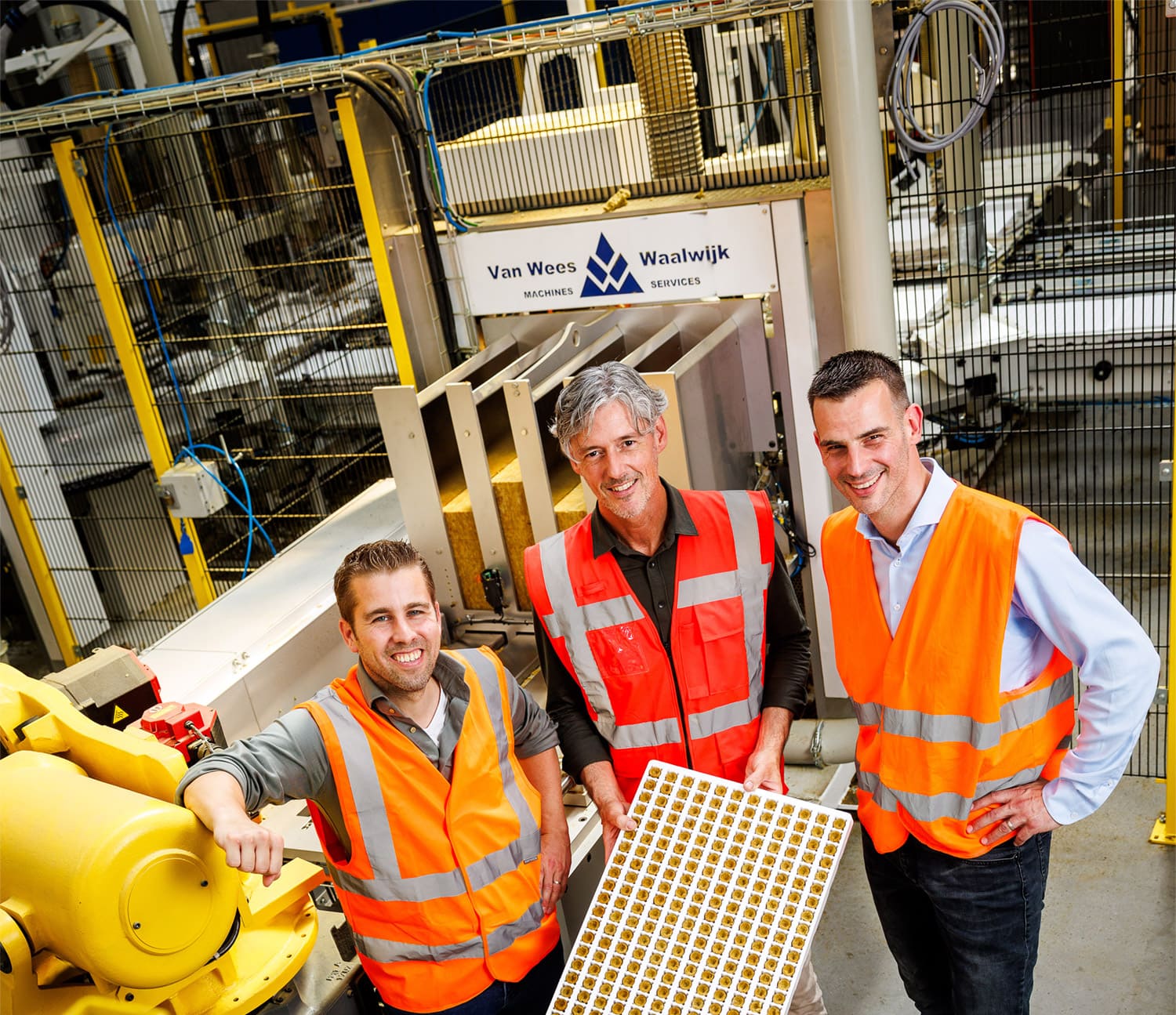
Van Wees Waalwijk and Saint-Gobain Cultilene on a custom-built special-purpose machine

Staffing needs also changed drastically. The line could be scaled back from six operators to a single operator who monitors the line. That doesn’t mean jobs were lost. On the contrary. The employees who were freed up could be reassigned elsewhere in the company, to areas where there are also staffing shortages.

For Cultilene, the investment meant much more than just efficiency. It was a strategic step toward future-proof production.

“If we hadn’t developed these machines back then, we would have had a real problem by now,” says Léon Kennis. “This investment helps us stay competitive.”

Everything under one roof

What sets Van Wees Waalwijk apart is that the entire process takes place under one roof:

Because production is also done in-house, parts can be quickly modified or remade. This makes post-delivery optimization much more efficient. After all, in custom machine building, the work doesn’t stop with delivery.

Every machine is, in fact, version 1.0.

It is only through practical application that further refinements emerge. Van Wees Waalwijk remains closely involved in this process as well.

At Van Wees Waalwijk, custom machine building isn’t about off-the-shelf solutions, but about understanding processes. It is precisely by combining engineering, practical knowledge, and collaboration that we create machines that do what they’re supposed to do—today and tomorrow.

This simple yet smart solution does exactly what is needed and is built to last for years in an intensive production environment.

This is where Van Wees Waalwijk excels: customized solutions that work.
We make it happen in the food industry.

Customer Testimonial

“The most important thing is trust. You know everything will work out, and that Van Wees Waalwijk won’t leave until it’s working.”

Léon Kennis, Cultilene

We use cookies to ensure that our site runs as smoothly as possible. If you continue to use this site, we'll assume that you agree. Please review our privacy policy for more details.